
RPCC will act as a useful repository for health policy documents
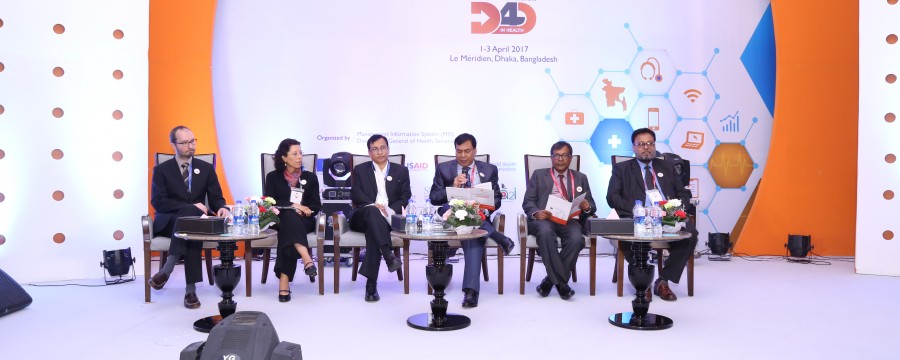
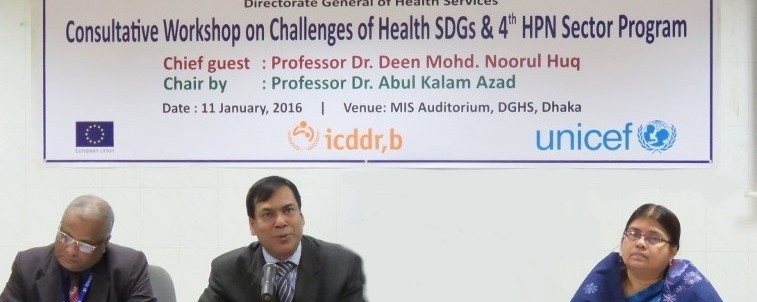
International Conference on Data for Decision
Using Health data in Policy Making
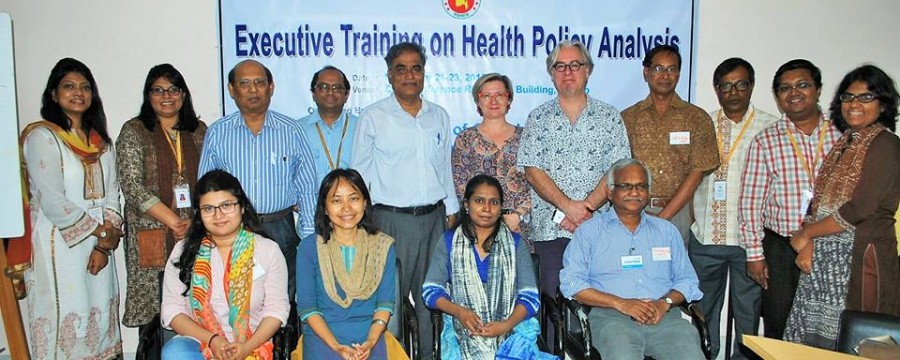
Engaging Policy makers & Program managers with research evidence
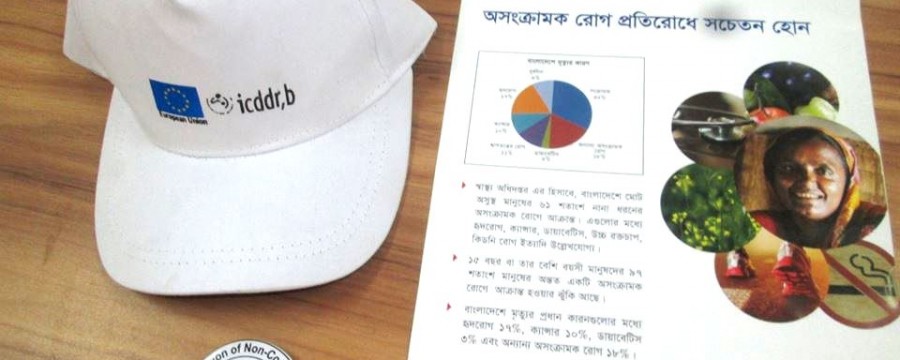
Public awareness on Non Communicable Diseases(NCD)
The Research to Policy Communication Cell (RPCC) within the Directorate General of Health Services (DGHS) is an online portal and repository of relevant evidence for tackling health problems in Bangladesh that was originally established as part of a Welcome Trust/WHO grant to icddr,b to enhance evidence-informed health policy making. The RPCC acts as a point of contact and communicator of high quality evidence for health policy decision-making between DGHS and the research community. Through RPCC- research evidence, knowledge of health issues and health interventions are disseminated in the form of policy briefs and full-length articles to both the public, research community and policy makers of Bangladesh.
This website aims to be a one-stop-shop of information for those interested in health research and health policy in Bangladesh. Hosted by the DGHS, this website pulls together health research evidence from academic publications, policy briefs, newspapers and other source
SHARE (Strengthening Health, Applying Research Evidence) project implemented by icddr,b is supporting the DGHS to strengthen RPCC. This is a capacity building initiative under the European Union’s ‘Supporting Public Health Institutes Programme’ (SPHIP) being implemented in eight countries including Bangladesh.
Research
Read More
Policy Brief
Read More
Research Guide
Read More
- Munny, FA, Pranto, AH, Paul, S, Haque, MA, Sharmin, R, Sultana, S et al.. Reduced Serum Soluble L-Selectin Levels but Not PCSK9 May Be Associated With Generalized Anxiety Disorder: A Case-Control Study. J Clin Lab Anal. 2025; :e70144. doi: 10.1002/jcla.70144. PubMed PMID:41351290 .
- Gupta, BP, Sah, AK, Sah, AK, Gupta, VP, Ghimire, DP, Acharya, N et al.. Seroprevalence of hepatitis E in general, hepatic, and pregnant populations in Nepal, Bangladesh, and Pakistan: a systematic review and meta-analysis. Virol J. 2025; :. doi: 10.1186/s12985-025-03027-8. PubMed PMID:41350906 .
- Hasan, MT, Hossain, MK, Watterson, J, Saha, M, Layton, N, Islam, MJ et al.. Giving voice to the Deaf community: co-designing a Bangla Mental Health Sign Language Bank in Bangladesh. Lancet Psychiatry. 2025; :. doi: 10.1016/S2215-0366(25)00334-7. PubMed PMID:41349569 .
- Haq, I, Rahman, A, Akter, MR, Hossain, D, Nobrega, D. Bayesian modeling of Escherichia coli contamination in household drinking water in Bangladesh: evidence from the Multiple Indicator Cluster Survey 2019. Int Health. 2025; :. doi: 10.1093/inthealth/ihaf138. PubMed PMID:41348992 .
- Ripon, RK, Hossain, MJ, Volquez, M, Meda-Monzon, E, Saunik, S, Prasad, N et al.. PFAS Exposure and Endocrine Disruption Among Women. JAMA Netw Open. 2025;8 (12):e2539425. doi: 10.1001/jamanetworkopen.2025.39425. PubMed PMID:41348362 .
Recent Activities
- 2019
-
Jan 14
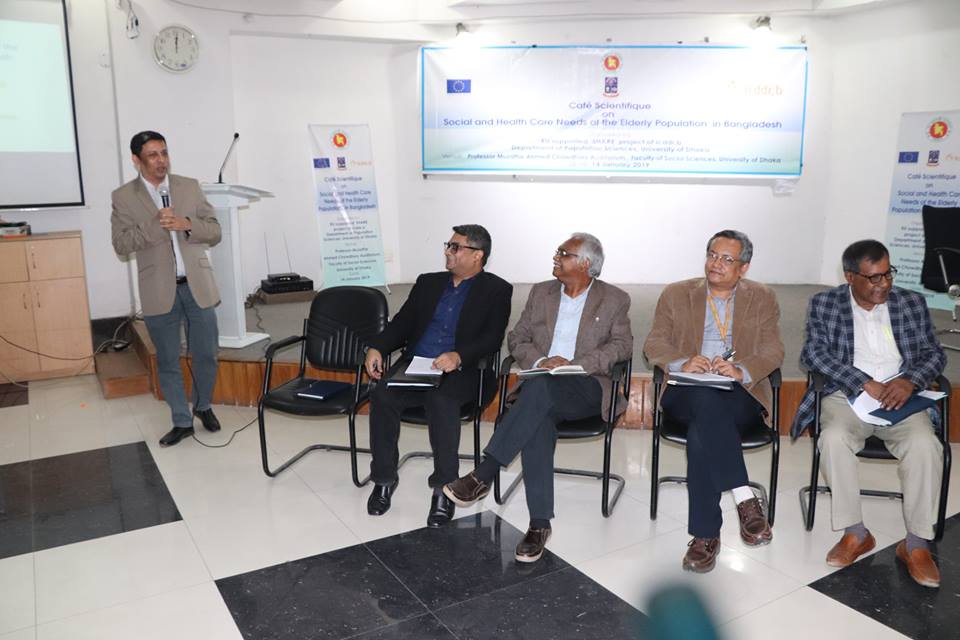
4th Cafe Scientifique

icddr,b’s ‘Strengthening Health, Applying Research Evidence (SHARE)’ project in collaboration with Department of Population Sciences (DPS), University of Dhaka has organised the (4)fourth Café Scientifique on 14th January 2019 with the theme of social and health care needs of elderly population in Bangladesh. This is a platform for open discussion ..Read more
- 2018
-
Dec 20
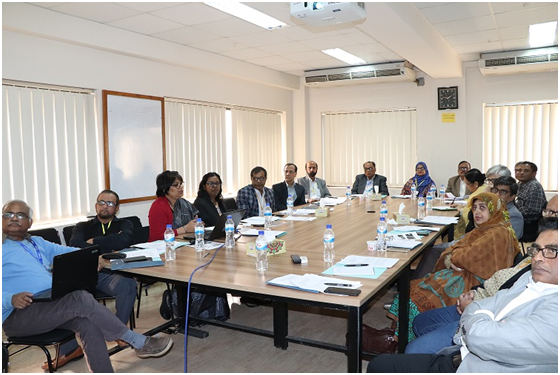
6th TAG Meeting

TAG meeting
Prof. Dr. Nasima Sultana, ADG (Admin), DGHS chaired the TAG meeting. Dr. Iqbal Anwar, Scientist, and Principal Investigator, of SHARE project welcomed all the meeting participants.
Highlights of the discussion:
The meeting minutes of the 5th TAG meeting were read-out and after detailed discussions it was approved unanimously.
Then Dr. Iqbal Anwar ..Read more


Family Planning : A Global Handbook for providers